2026-04-01
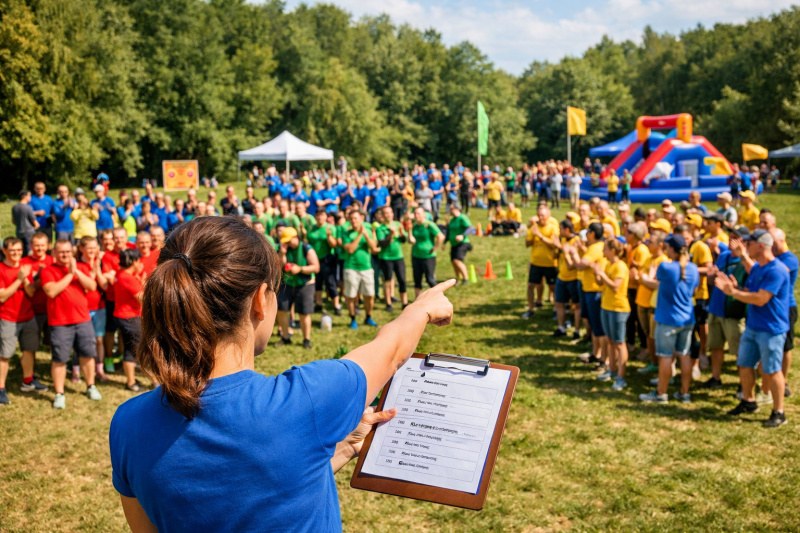
Organizing a large-scale team-building event requires a high level of expertise. The more participants you have, the greater the complexity: multiple groups, parallel activities, and increased logistical demands.
The goal, however, remains the same: to create a meaningful experience, strengthen collaboration, and deliver real value for participants.
1. Structured group division
For groups over 100 people, dividing participants into smaller teams is essential to ensure engagement and interaction.
- 10–15 participants per group is ideal
- predefined or mixed groups
- parallel program structures
2. Precise timing
Delays in large events can quickly escalate. Transitions between activities must be carefully planned.
- clear start and end points
- time buffers included
- synchronized parallel sessions
3. Venue and infrastructure
The right venue is critical—not just in size, but also in layout and technical capabilities.
- multiple spaces or zones
- audio-visual setup
- easy internal movement
4. Clear communication
With large groups, information can easily get lost. Clear communication is essential at every stage.
- detailed pre-event communication
- on-site coordinators
- simple, clear instructions
5. Engagement and experience
The biggest challenge is keeping everyone actively involved. Passive audiences should be avoided in favor of interactive experiences.
- experience-based activities
- team challenges
- continuous engagement
6. Professional execution
Behind every successful large event is a well-coordinated team. Facilitators, organizers, and logistics ensure everything runs smoothly.
The best team-building events are those where participants only experience the flow—not the complexity behind it.
If you want to deliver a seamless and impactful 100+ person event, working with experienced professionals is essential.

2026-10-11


2026-09-21

2026-09-11

2026-09-01
2026-08-14


2026-07-16