2026-07-16
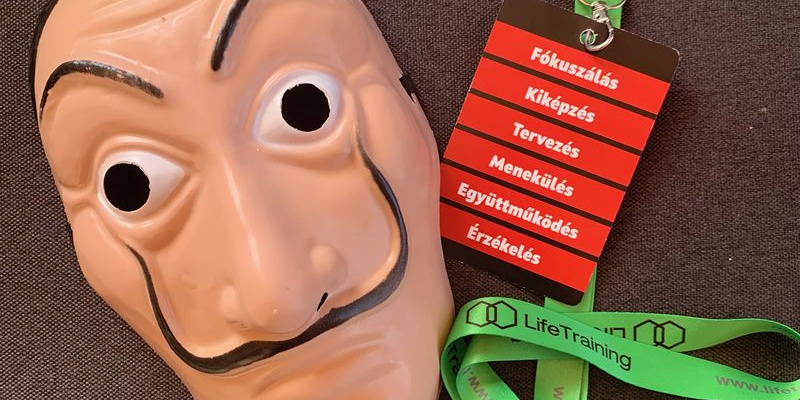
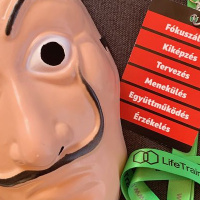
THE Big Bank Robbery our team building program places participants in an exciting film story. The teams become part of a large-scale mission, where each station represents another test. To successfully complete the mission, a few skillful players are not enough - the contribution of all participants is required.
More than a game
During the program, participants can try themselves in different situations. There are places where precise planning is important, in other places concentration or creative problem solving come to the fore. Some tasks require quick decisions, while others require patience and a common strategy.
This is what makes the program a real team-building experience: everyone can show each other's strengths, while success can only be achieved by working together.
What you take with you to the workplace
The story is built around a spectacular mission, but the development is very real. Participants will experience how to cooperate under pressure, how to divide tasks, when to make decisions as a leader, and when it is more important to listen to the ideas of others.
For many teams, the biggest realization is that the operational patterns that define cooperation in everyday work also appear during the game. The only difference is that here they can be recognized and developed in a safe, playful environment.
It is also ideal for large teams
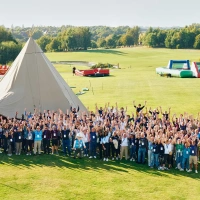
One of the biggest advantages of the program is that it can be divided into smaller teams for hundreds of participants. Each team is part of the same story, yet completes its own missions, so everyone becomes an active player, not just a spectator of the events.
Thanks to the well-structured scenario and the parallel stations, continuous activity, healthy competition and a shared sense of success can be ensured at the same time.
Because it provides an exciting, movie-like experience at the same time, while developing communication, cooperation, problem solving and trust within the team. The participants do not listen to a lecture - they themselves become the protagonists of the story.

2026-09-11

2026-09-01

2026-08-14


2026-07-16