2026-02-21
What is gamification in team development?
Gamification is not simply a game. It creates structured experiential situations in which participants use their real business skills: communication, strategic thinking, problem solving and collaboration.
Why does it work more effectively than a classic training?
In a game situation, we react faster, communicate more honestly and assume roles more naturally. Decisions made under pressure, unexpected twists and turns, and actions taken towards a common goal show exactly how a team really works.
Cooperation under pressure
A dynamic, challenging program, such as a team experience inspired by the Squid Game, is a great way to highlight how a team communicates under stress. Who will take the lead? Who stays in the background? How are decisions made? The key to joint success here is not individual performance, but coordinated operation.
Roles and strategy
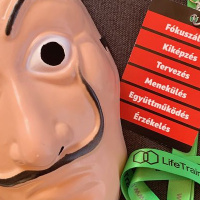
A story-based mission game—for example, a casino heist-themed strategy program—makes team roles visible. Who is a strategic thinker? Who is the operational implementer? Who is coordinating the communication? As the game progresses, these roles naturally develop and provide immediate feedback on team dynamics.
What does the organization learn from this?
- Faster and more conscious decision-making
- More effective communication
- Clearer roles and responsibilities
- Stronger trust between team members
- Shared strategic thinking
Experience or development?
A well-constructed gamification program does more than just provide an experience. It starts a real learning process with structured reflection and professional processing. The game is thus not a goal, but a tool: a mirror that shows how the team works - and provides an opportunity for conscious development.
The question is not whether we play, but whether we consciously use the power of the game to develop the organization.
Get to know our latest team building games:

The Great Casino Robbery - Mission in Monte-Carlo

Squad Game - Where every move counts


2026-09-21

2026-09-11

2026-09-01


2026-08-14


2026-07-16