2026-10-11
Few technological shifts have divided workplace teams as much as the rise of AI tools. Within the very same team, you'll find people eagerly integrating AI into their daily work, and others who are openly or quietly worried about their own position. If left unaddressed, this duality can become a serious source of tension.
The real roots of the fear
Employees' anxiety about AI rarely comes from the technology itself – it comes from uncertainty: not knowing what it means for their own role, and the absence of clear leadership communication about how AI fits into the team's future way of working. Uncertainty, not the technology itself, is the real source of stress.
The generational and role-based divide
An interesting pattern is that AI adoption doesn't necessarily split along generational lines the way one might first assume – in many cases, the nature of the role (routine vs. creative tasks) is a stronger predictor than age. This means leaders are better off addressing the topic individually rather than relying on generational assumptions.
What do we actually lose, and what do we actually gain?
The realistic picture justifies neither full euphoria nor full panic. AI tools typically speed up routine tasks that require low creativity the most, while freeing up time for activities where human judgment, connection, and creativity remain irreplaceable. The real question isn't whether it "takes the job away" – it's how the team redefines what it does with the freed-up capacity.
How should a team leader handle this?
- Open, regular communication about how AI fits into the team's strategy – don't leave room for assumptions
- Concrete, practical training on using the tools, not just an abstract "AI strategy" presentation
- Involving the team in deciding which tasks are worth using AI for
- Deliberate attention to those who are quietly anxious but don't raise their concerns openly
The team dynamics angle
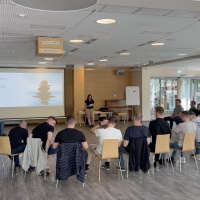
Introducing AI tools is also a good opportunity for a team to reaffirm its own collaboration patterns. A structured team session specifically focused on discussing fears and opportunities around AI is far more effective than a one-off, top-down communicated policy – because it gives team members room to honestly share what they think and to jointly shape how they want to work with the new tools.
AI on its own is neither a threat nor a salvation – which one it becomes for a team largely depends on how leadership communicates about it, and how much room is given to actually talk through the questions and concerns.

2026-09-11

2026-09-01


2026-08-14



2026-07-16